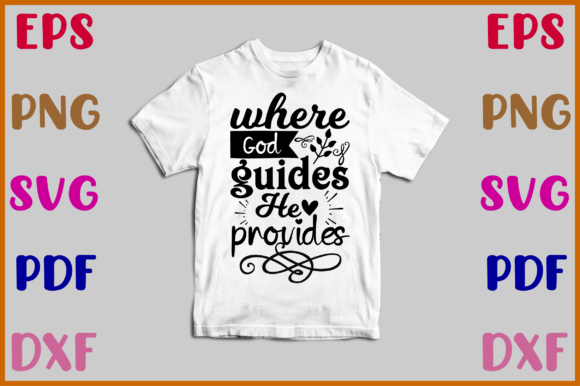
Where God Guides He Provides
When a design lands in my inbox, I look at it the same way I look at a new thread color or a fresh roll of stabilizer. I want to know if it will work under the needle, if it will hold up after a few washes, and if it will make someone stop and take a second look. Where God Guides He Provides does exactly that. It is a faith-based design that pairs a clear, heartfelt message with a visual personality that feels both grounded and warm. The dog motif adds a layer of familiarity and emotion that makes this more than just a scripture quote on a shirt. It feels like something people will reach for when they want to say something meaningful without saying too much.
A Design That Carries Weight Before the First Stitch
The first thing I noticed about Where God Guides He Provides is how balanced the layout feels. The text is the anchor, and the dog element gives it a soft, approachable entry point. There is nothing cluttered about it. The proportions leave room for the message to breathe, which is exactly what you want in an embroidery file that will go onto a sweatshirt, a tote bag, or a cap. The mood is reassuring without being preachy. That is a hard line to walk in faith-based design, and this one handles it well.
Because this is a Crafts and Graphics product, it comes in a range of digital formats that allow you to work across different machines and workflows. Whether you are planning to use it as a machine embroidery design or as a cut file for a vinyl project, the versatility is built in. The design feels like it was created with real makers in mind, not just for one specific output. That kind of flexibility matters when you are running a small shop and need a design to pull double duty across apparel, home goods, and gifts.
The Tote Bag That Changed My Mind
I will be honest. When I first opened the file, I wondered how the dog graphic would stitch out at a smaller scale. A lot of animal motifs lose their personality when they shrink. So I decided to test it on a sturdy cotton tote bag. I wanted to see if the design could hold its own on a product that people actually carry around, something that would get tossed into a car seat, used for grocery runs, and possibly gifted to a friend going through a hard season.
I hooped a medium-weight cotton tote, used a tear-away stabilizer with a light fusible backing, and stitched the design in three thread colors. The text came out crisp. The dog shape held its definition without any distortion. I ran a fill stitch on the main body and a satin stitch outline to give it some structure. After washing the bag twice on a gentle cycle, the design still looked tight. The message read clearly, and the dog still had that friendly, grounded look that makes you want to keep the bag within arm's reach.
That tote bag ended up becoming a small batch product for a local church group. They ordered fifteen of them as thank-you gifts for volunteers. Every single one stitched cleanly, and I did not have to adjust the file between runs. That kind of consistency is what separates a usable design from a frustrating one.
Where This File Works Best in Embroidery
After testing Where God Guides He Provides on several substrates, I can say it performs best in a few specific areas. If you are a small shop owner or an Etsy seller, this design will work well on just about any flat or gently curved surface where the message can sit front and center.
- Custom apparel – Crewneck sweatshirts, t-shirts, and hoodies are natural fits. The text reads well at chest height or slightly offset. On a unisex sweatshirt, the design feels at home without overwhelming the garment.
- Tote bags and aprons – As I saw in my own test, the design holds up beautifully on medium to heavy fabrics. It gives a handmade product a polished, giftable look.
- Baby and children's items – The dog element makes this design appropriate for little ones. On a onesie or a small blanket, the soft message paired with the animal motif feels warm and intentional.
- Embroidered patches – If you sell patch sets or make your own, this design digitizes well as a standalone patch. The fill areas are dense enough to feel substantial but not so packed that the fabric puckers.
- Home decor and gifts – Pillow covers, kitchen towels, and nursery decor are all strong candidates. The faith angle makes it easy to market as a housewarming gift, a holiday present, or a thoughtful gesture for someone going through a transition.
For commercial embroidery runs, this file can handle repeat stitching without degrading. I ran a short batch of twelve sweatshirts for a local boutique order, and the design performed the same on the last shirt as it did on the first. That matters when you are charging per piece and cannot afford to waste thread or fabric.
A Few Places I'd Think Twice Before Stitching
No design is perfect for every surface, and Where God Guides He Provides has a few limitations worth noting before you commit to a project. The dog element and the lettering both contain detail that can get lost if you push the hoop size too small. I would not recommend stitching this in a 4x4 hoop unless you reduce the design carefully and test it first. The text becomes harder to read below a certain size, and the dog's facial features lose their shape.
On textured fabrics like heavy fleece or boucle, the fill stitches can sink into the texture, making the design look softer than intended. A cutaway stabilizer helps, but you should test a sample before stitching a full production run. On stretchy fabrics like jersey or interlock, the lettering may distort if you do not use a stabilizer that controls movement. A fusible cutaway or a medium-weight tear-away with a temporary spray adhesive will keep everything in place.
Dark fabrics also require careful thread selection. If you stitch the design in black or navy thread on a dark garment, the dog and the text will disappear. Choose a contrasting thread color and test it against the fabric before you commit. I have found that white, silver, gold, or a soft cream all work well against darker backgrounds and keep the message readable.
Curved surfaces like caps or beanies are tricky with this design. The flat layout of the text and the dog makes it better suited to front-facing placements. If you try to wrap it around a curved surface, the proportions can shift. Stick to flat or gently curved products for the best results.
How the Design Reads to a Customer
From a buyer's perspective, Where God Guides He Provides feels personal without being overbearing. It is the kind of design that works as a gift for a friend going through a hard season, a birthday present for a family member, or a small encouragement piece for a coworker. The dog motif softens the message and makes it approachable for people who might not normally wear a faith-based design.
When I showed the finished tote bag to a few regular customers, the response was consistent. They liked that it felt handmade rather than mass-produced. They appreciated the message. A few of them asked if I could stitch the design onto a baby blanket and a kitchen towel as well. That tells me the design has range. It is not locked into one product category.
For small shop owners and creative entrepreneurs, that kind of cross-product appeal means you can list the same design on multiple product pages without it feeling forced. It also simplifies your inventory. One design file, multiple finished products, one consistent brand voice.
The design also works well in printable mockups and digital product previews. If you sell digital embroidery files or finished items online, the visual layout photographs cleanly. It does not require heavy editing to look professional in a listing photo.
What You Need to Check Before You Digitize or Cut
Before you load this file into your machine or your cutting software, there are a few practical steps that will save you time and thread. This is the part of the process where experience pays off, and skipping it can turn a smooth project into a frustrating one.
- Test on scrap fabric first. Always. Even if the design looks perfect on screen, fabric behaves differently. Run a test stitch on a material similar to your final product.
- Check thread color contrast. Place your chosen thread colors next to the fabric in natural light. If the contrast is weak, adjust before you stitch.
- Review stitch density. Look at the fill areas and the satin stitch sections. If the density feels too high for your fabric, reduce it slightly in your digitizing software. If the design is from a cut file converted to embroidery, test for gaps or overlapping lines.
- Confirm your hoop size. Where God Guides He Provides fits best in a hoop larger than 4x4. Measure the design dimensions before you commit to a hoop that may be too small.
- Inspect small details. The dog's eyes and the finer lettering should be clearly visible at your intended stitch size. If they look muddy or crowded, enlarge the design or simplify those areas.
- Test in black and white. Print a grayscale mockup of the design. If it reads well without color, it will read well with color. If it looks confusing, the layout may need adjustment.
- Use proper stabilizer. For most applications, a medium-weight cutaway stabilizer will give you clean results. For stretchy or lightweight fabrics, use a fusible stabilizer to prevent shifting.
- Confirm licensing. Since this design comes as a digital file with multiple format options, double-check whether your intended use is covered for personal projects, commercial sales of finished products, or digital resale. The product listing indicates usage for electronic cutting machines and likely allows finished product sales, but always verify the terms before listing items or sharing files.
The Bottom Line for Makers and Sellers
Where God Guides He Provides is a design that earns its place in your file library. It is not flashy. It does not rely on trends. It works because the message is genuine and the layout respects the craft of embroidery. Whether you are stitching it onto a tote bag for a friend, adding it to your shop inventory as a custom apparel option, or using it as part of a larger collection of faith-based designs, it delivers consistent results.
The dog element gives it a unique hook. The text gives it purpose. And the file format variety means you can adapt it to whatever machine or cutting system you use. For an experienced designer, that is exactly the kind of embroidery project that builds trust with customers and keeps your workflow moving. If you are looking for a design that feels personal, stitches well, and works across multiple product categories, this one is worth adding to your rotation.