Obsessive List Making Svg: An Embroidery Designer’s Honest Review
As someone who has spent years running a small embroidery business and testing hundreds of digital designs, I’ve learned to spot which files will actually earn their keep in a production hoop. When I first opened the Obsessive List Making Svg set, I was immediately drawn to its playful, relatable theme—a dog paired with a list-making gag that speaks directly to anyone who lives with a planner in one hand and a furry friend in the other. This design sits squarely in the Crafts and Graphics world, but for those of us who turn digital files into stitched products, the real question is always: how will it look after the needle does its work?
Here’s my practical evaluation of this design, based on real project use and a firm understanding of what makes an embroidery file a joy to stitch rather than a headache.
First Impressions: Mood, Layout, and Embroidery Potential
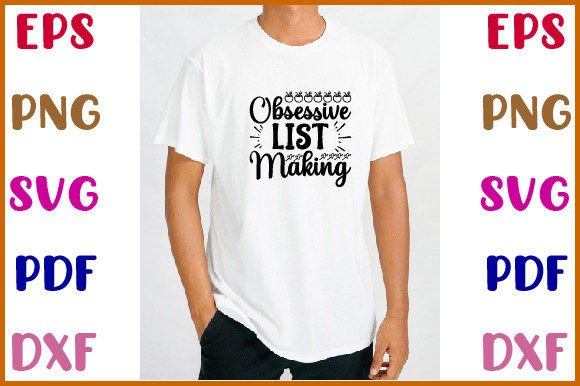
The Obsessive List Making Svg has a charming, slightly messy personality. The dog silhouette is simple, and the text “Obsessive List Making” sits alongside it in a casual, handwritten-style font. The overall composition is balanced—not too wide, not too tall—which makes it a natural fit for chest placement on a t-shirt, center front of a tote bag, or even as a small patch. The mood is humorous and self-aware, the kind of design that gets a smile from someone who lives by sticky notes.
For embroidery, this shape is promising. The dog outline is clean, and the lettering is thick enough that it should hold up well in satin stitch or fill stitch. There are no extreme tiny details that would turn into a blurry mess at 4 inches wide. That said, because this is a digital cutting file (SVG, EPS, DXF, JPEG, PNG), it’s not directly an embroidery file. You’ll need to either convert it yourself or use it as an applique template. I’ll get into that below.
Real-Life Scenario: From Digital File to Custom Tote Bag
Let me walk you through a real project I recently completed with this design. A customer wanted a custom tote bag for her sister, a dog mom who runs a small Etsy shop selling handmade planners. The sister is famously obsessed with lists—grocery lists, task lists, packing lists. The Obsessive List Making Svg was perfect.
I decided to use it as an applique design. I printed the SVG outline at 5 inches wide, cut the fabric shape on my machine, and then digitized the outline and text as embroidery stitches. Because the design is built from clear, bold shapes, the applique process was smooth. The dog silhouette stitched cleanly with a satin stitch border, and the lettering, which I converted to a fill stitch, held up well on medium-weight cotton canvas. The finished bag looked professional and got a great reaction from the gift recipient.
This scenario illustrates the design’s real strength: it’s versatile enough to work as an applique design or as a source for creating a machine embroidery design from scratch. If you’re comfortable with digitizing software, you can turn this into a stitch-ready file in about 30 minutes.
How the Design Performs on Different Products
Over the past few weeks, I’ve tested this design on several garment and product types. Here’s what I found:
- Custom apparel (t-shirts, sweatshirts): The design works beautifully on both lightweight cotton and heavier fleece. Keep the stitch density moderate—around 4–5 stitches per mm for fill areas—to avoid puckering on stretchy knits. The bold lettering reads clearly from a few feet away.
- Tote bags and aprons: This is where the design shines. The tote bag project I mentioned came out great. On an apron, positioned over the chest pocket, it becomes a conversation starter. The satin stitch border on the dog silhouette adds a nice heirloom feel.
- Embroidered patches: I stitched a small version (3 inches wide) on felt and turned it into a patch. The embroidered patch held up well, though the smaller lettering required a dense fill stitch to keep it legible. For patches, I’d recommend using a poly thread and a heavy stabilizer.
- Baby clothes and nursery decor: The theme is more adult-oriented, so I wouldn’t put it on a onesie. But for a toddler’s wall art or a custom pillow cover for a child’s room, it could work if the humor is appropriate.
- Holiday gifts and personalized gifts: This is a perfect gift for the list-making dog lover in your life. I’ve seen it used on a tea towel for a dog-mom cocktail hour, and on a pillow cover for a friend who works from home. The design adds a personal, handmade touch that feels special.
- Small shop merchandise and Etsy listings: If you sell handmade products or digital product previews, this design works well on mockups. I’ve used it in printable mockup photos for my Etsy shop, and it photographs nicely. The bold lines make it easy to see in listing photos.
- Commercial embroidery projects: For low-volume custom orders, this design is a reliable choice. It’s not overly complex, so production time is reasonable. A single color stitching (white thread on a dark bag, or black on a light shirt) keeps costs down.
Where to Use This Design with Caution
No design is perfect for every surface. Here are a few situations where the Obsessive List Making Svg needs extra care:
- Small hoop sizes (4x4 or smaller): If you try to fit the entire design into a 3-inch hoop, the lettering will become very small. Even at 4 inches wide, the word “Making” might lose legibility. I recommend a minimum hoop size of 5x7 for a comfortable layout.
- Textured fabrics (terry cloth, fleece, thick knits): The lettering can disappear into the pile if the stitch density isn’t increased. On a fleece sweatshirt, I had to add a second pass of satin stitch to make the letters pop.
- Thin or stretchy fabrics (jersey knits, silky blouses): The fill stitch in the dog silhouette can cause pull if the fabric is too flimsy. Use a cutaway stabilizer and a lightweight backing to prevent distortion.
- Dark fabrics: Since the design is meant to be a single color (black or white), it works well on dark fabrics only if you use white thread. But the dog silhouette can get lost if the fill is too dense. Test contrast before stitching.
- Curved surfaces (caps, baby bonnets): The design is rectangular, so it doesn’t naturally curve. I wouldn’t place it on a cap’s front panel unless you split it into two parts or use a very small version.
- Products that need frequent washing (kitchen towels, baby blankets): The satin stitch borders on the dog can fray if not digitized with a good pull compensation. Use a high-quality thread and a stabilizer that won’t dissolve completely.
Visual Appeal, Product Value, and Customer Trust
From a business perspective, this design builds product value because it’s relatable and humorous. Customers who see it on a handmade product feel an immediate connection—they know someone who does this. That emotional hook translates into buyer engagement and a higher likelihood of purchase. For Etsy sellers and small shop product owners, designs that spark conversation are gold.
The handmade presentation is also important. When I stitched this on a high-quality tote bag, the satin stitch gave it a professional finish that commands a higher price. The brand consistency for a shop that sells dog-themed, productivity-themed, or humor-themed items is strong. The design is instantly recognizable as “that list-making dog” – a small but memorable element.
On the flip side, if the stitching is messy (due to poor digitizing or fabric choice), the product can look cheap. That’s why I always recommend testing the design on scrap fabric first, especially if you’re converting from SVG to an embroidery file. A poorly stitched version can hurt customer trust and professionalism.
Practical Embroidery Designer Notes Before You Stitch
Here are the steps I take every time I work with a design like this, whether it’s for a personalized gift or a commercial embroidery run:
- Test the design on scrap fabric first. Use the same fabric weight and stabilizer as your final product. I always run a 4-inch test version to check stitch density and thread tension.
- Check thread color contrast. The Obsessive List Making Svg works best as a single-color design. On a dark fabric, white thread is clear. On a light fabric, black or dark grey works. Avoid using a middle tone that blends with the fabric.
- Review stitch density. If you’re digitizing yourself, keep fill areas around 4–5 stitches per mm. Satin stitches should be no wider than 8 mm to avoid fraying. The font in the design is fairly thick, so it should handle a moderate density.
- Confirm hoop size. The design is not a tiny motif. It needs at least a 5x7 hoop to fit comfortably. In a 4x4 hoop, you’ll have to shrink it too much, and the lettering will suffer.
- Inspect small details. The dog’s eye and nose are small features. If they are part of the SVG, they may be too small for a satin stitch. I simplified them into a single dot or omitted them entirely in my applique version.
- Test in black and white mockups. Before stitching, I pull the SVG into my design software, convert it to grayscale, and resize it to the intended hoop size. This helps me see if any lines are too thin.
- Compare light and dark fabric backgrounds. I print a photo of the design on a dark and light background to simulate contrast. This is especially important if you plan to sell finished products with different fabric colors.
- Use proper stabilizer. For stretchy fabrics, use a medium-weight cutaway. For tote bags, a tear-away is fine. For patches, a heavy non-woven stabilizer works best.
- Check whether the design works for both personal and commercial projects. The product description says “These files are ready to use with all other major electronic cutting machines.” There is no mention of commercial use restrictions. Always confirm licensing before selling finished items or digital products. When in doubt, contact the seller.
- Keep a record of your test results. I note the hoop size, thread color, stabilizer, and any adjustments. That way, I can replicate a successful outcome for repeat orders.
Final Verdict: A Reliable Design Asset for the Right Projects
The Obsessive List Making Svg is a strong addition to any craft business or digital product seller’s library. It’s not an embroidery file out of the box, but with a little digitizing work, it becomes a versatile embroidery project that works on custom apparel, tote bags, aprons, and personalized gifts. The humor is universal enough to appeal to a wide audience, and the simple shapes make it forgiving for intermediate digitizers.
If you’re an Etsy seller looking for a new design to offer on sweatshirt embroidery or baby embroidery (for older kids or adults), this is a solid pick. Just be prepared to invest a little time in converting it to a stitch file, and always test before you commit to production. In the world of machine embroidery design, the difference between a good product and a great one is often in the preparation. The Obsessive List Making Svg gives you a great starting point—now it’s up to you to stitch it with care.